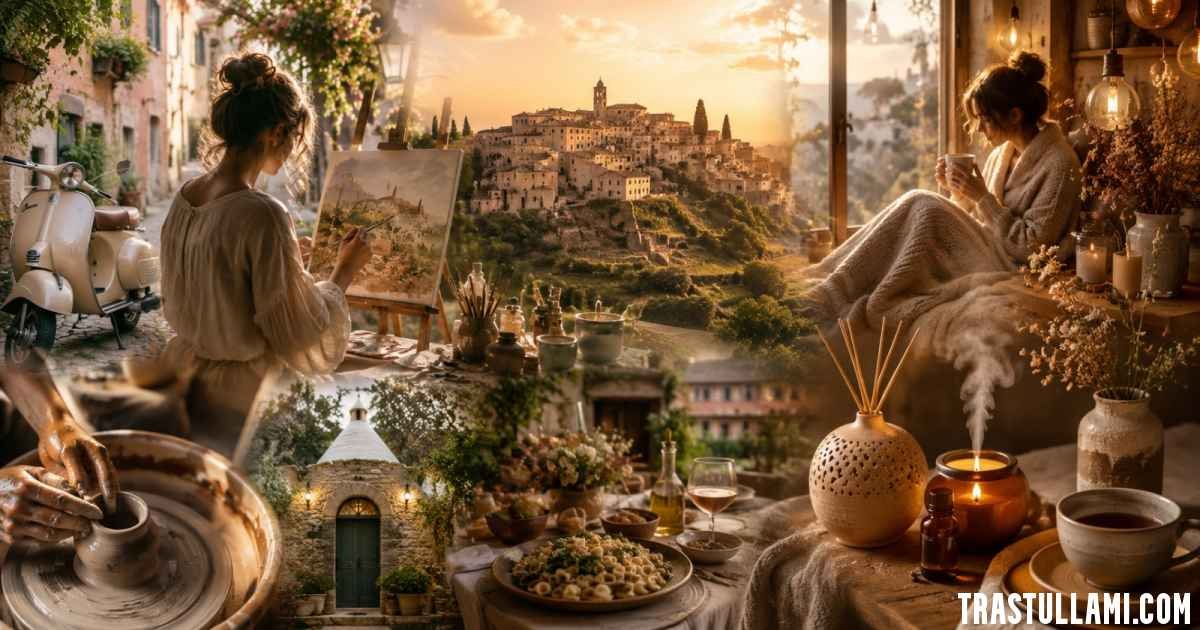
In 2026, Trastullami has become one of the fastest-growing cultural concepts discussed across lifestyle blogs, social media, literature communities, and wellness platforms. More than just an Italian word, it represents a philosophy centered on creative play, mindful living, artistic expression, and intentional enjoyment in an increasingly digital world.
As artificial intelligence, automation, and always-on technology reshape daily life, millions of people are searching for healthier ways to reconnect with themselves. This search has contributed to the popularity of trastullami, a concept inspired by the Italian verb trastullare, meaning “to amuse oneself,” “to play,” or “to pass time joyfully.”
Today, Trastullami is often compared to philosophies like Hygge, Ikigai, and Dolce Far Niente, yet it offers something unique—a balance between playfulness, creativity, storytelling, and mindful entertainment.
This comprehensive guide explores everything you need to know about Trastullami in 2026, including its origins, literary influence, lifestyle philosophy, artistic significance, practical applications, and future impact.
What Is Trastullami?
Trastullami is derived from the Italian verb trastullare, which traditionally means to entertain oneself, play, enjoy pleasant distractions, or spend time joyfully.
Grammatically, trastullami can be understood as “entertain me” or “let me play.” Although rooted in Renaissance Italian, the term has evolved into a broader cultural movement that encourages people to slow down and embrace meaningful moments instead of constant productivity.
In 2026, the word symbolizes:
- Mindful entertainment
- Creative self-expression
- Slow living
- Authentic storytelling
- Intentional relaxation
- Sensory experiences
- Human connection
- Joyful presence
Rather than encouraging endless scrolling or passive digital consumption, Trastullami promotes conscious enjoyment through creativity, craftsmanship, conversation, music, literature, art, and nature.
The Linguistic Origins of Trastullami
Understanding Trastullami begins with its linguistic history.
The Italian verb trastullare dates back centuries and was commonly used during the Renaissance period. It described activities such as:
- Music
- Storytelling
- Courtly games
- Gentle conversation
- Leisurely recreation
- Artistic play
Its noun form, trastulli, refers to amusements, pleasant distractions, games, or enjoyable pastimes.
Historically, these activities weren’t viewed as wasted time. Instead, they were considered essential for maintaining emotional balance, creativity, and social connection.
In today’s fast-paced society, this historical meaning has become surprisingly relevant.
Many cultural commentators now describe Trastullami as a response to modern problems including:
- Digital overload
- Burnout
- Constant notifications
- Productivity pressure
- AI-driven work environments
- Social media fatigue
As automation takes over repetitive tasks, people increasingly seek ways to reclaim their humanity through playful, meaningful experiences.
Trastullami in Literature and Cultural History
One reason Trastullami gained renewed attention is its connection to influential literary and historical works.
Perhaps the most well-known academic association comes through Alessandro Portelli’s celebrated work, “The Death of Luigi Trastulli and Other Stories.”
Although the book focuses on oral history rather than the philosophy itself, Portelli demonstrates how ordinary memories, conversations, and seemingly small experiences shape personal identity and collective history.
This connection between memory, storytelling, and human experience aligns closely with the modern interpretation of Trastullami.
Another frequently cited literary example appears in Yukio Mishima’s “The Frolic of the Beasts” (Trastulli di animali).
Within the novel, playful relationships exist alongside themes of guilt, obsession, and emotional complexity. The story highlights an important idea:
Play can be healing—but without balance, it can also become destructive.
This dual nature resonates strongly with Generation Z and Millennials, many of whom balance moments of joy against concerns such as climate anxiety, career uncertainty, and burnout.
Additional historical references include:
- 18th-century Italian cantatas
- Satirical poetry by Giovanni Battista Casti
- Traditional Italian storytelling traditions
- Folk performances
- Community festivals
Together, these influences helped transform trastullare from a simple verb into a cultural philosophy.
The Trastullami Lifestyle Philosophy
In 2026, many people describe Trastullami as Italy’s answer to Hygge and Ikigai.
However, it differs from both by emphasizing active joy instead of passive comfort.
The philosophy rests upon several core principles.
1. Sensory Living
Trastullami encourages engaging all the senses.
This may include:
- Natural fragrances
- Handmade ceramics
- Traditional textiles
- Fresh regional foods
- Music
- Flowers
- Artisan objects
Lifestyle brands inspired by southern Italy often combine these elements into rituals that transform everyday moments into memorable experiences.
2. Joyful Imperfection
Instead of striving for flawless aesthetics, Trastullami celebrates:
- Handmade crafts
- Natural textures
- Imperfect pottery
- Vintage furniture
- Weathered materials
- Personal creativity
This approach reflects traditional artisan values where character matters more than perfection.
3. Local Heritage
The movement values:
- Regional craftsmanship
- Community traditions
- Local storytelling
- Family recipes
- Cultural memory
Rather than consuming generic global trends, followers are encouraged to appreciate the uniqueness of local culture.
4. Healthy Digital Boundaries
Unlike endless doomscrolling, Trastullami promotes intentional breaks such as:
- Listening to music
- Reading literature
- Sketching
- Walking outdoors
- Gardening
- Journaling
- Playing an instrument
These activities help reset the nervous system while encouraging genuine relaxation.
Trastullami in Art, Film, Interior Design, and Creativity
Artists and designers have embraced Trastullami as a creative philosophy.
Contemporary visual art inspired by the concept often features:
- Organic forms
- Nature-inspired colors
- Playful compositions
- Emotional storytelling
- Handmade textures
One cinematic example frequently discussed is Ivano De Matteo’s “Trastwest.”
The film presents surreal scenes where ordinary people engage in playful, unexpected activities during periods of isolation, reminding viewers that creativity can flourish even under difficult circumstances.
Interior designers influenced by Trastullami often incorporate:
- Hand-painted tiles
- Natural wood
- Local ceramics
- Linen fabrics
- Artisan furniture
- Fragrant candles
- Organic architecture
- Sustainable materials
Instead of creating showroom-perfect interiors, they focus on spaces that feel lived in, welcoming, and emotionally meaningful.
How to Practice Trastullami in Everyday Life
One reason Trastullami has become so popular is its practicality.
You don’t need to move to Italy or completely change your lifestyle.
Simple daily habits can reflect its philosophy.
| Daily Area | Trastullami Practice | Potential Benefit |
|---|---|---|
| Morning | Light a scented candle, enjoy coffee without distractions | Greater presence |
| Work | Take a 5-minute creative break every 90 minutes | Improved creativity |
| Home | Decorate with handmade or vintage pieces | More personal living space |
| Evening | Read literature or listen to music instead of scrolling | Reduced stress |
| Social Life | Share stories and memories with friends | Stronger relationships |
| Travel | Explore one neighborhood deeply instead of rushing | Richer cultural experiences |
The philosophy encourages people to focus on presence rather than productivity.
The objective is not to optimize every minute but to enjoy moments that become lasting memories.
Trastullami vs Other Popular Wellness Trends
Many people compare Trastullami with other international lifestyle philosophies.
| Trend | Primary Focus | How Trastullami Differs |
|---|---|---|
| Hygge | Comfort and coziness | Adds creativity and playful experiences |
| Ikigai | Purpose and fulfillment | Prioritizes joyful everyday moments |
| Dolce Far Niente | Enjoying doing nothing | Encourages active amusement rather than complete idleness |
| Mindfulness | Present awareness | Welcomes joyful distraction as emotional restoration |
| Cottagecore | Romantic rural living | Can be practiced equally in cities through local culture |
The biggest distinction is storytelling.
Rather than simply feeling relaxed, Trastullami encourages creating experiences worth remembering and sharing.
The Future of Trastullami in 2026 and Beyond
Experts believe Trastullami will continue expanding beyond Italy over the coming years.
Several trends are already emerging.
Corporate Wellbeing
Some organizations are experimenting with dedicated creative breaks, sometimes described as “Trastullami Hours,” where employees engage in artistic or playful activities to reduce burnout.
Technology Integration
Instead of maximizing screen time, newer digital tools increasingly recommend:
- Local cultural events
- Creative prompts
- Walking routes
- Museums
- Music experiences
- Artisan workshops
The goal is to encourage meaningful offline experiences.
Global Cultural Influence
Countries including Japan, Brazil, and Scandinavian nations are adapting similar ideas while combining them with their own cultural traditions.
Responsible Commercialization
As popularity grows, many cultural advocates emphasize preserving the movement’s authentic values:
- Honest craftsmanship
- Local communities
- Sustainable production
- Historical appreciation
- Human connection
Without these foundations, Trastullami risks becoming just another marketing trend.
Final Thoughts
Trastullami has evolved into far more than an Italian expression. In 2026, it represents a growing cultural movement that encourages people to reconnect with creativity, storytelling, craftsmanship, sensory living, and mindful enjoyment.
Drawing inspiration from Italian linguistic heritage, Alessandro Portelli’s oral history, Yukio Mishima’s literature, contemporary art, artisan design, and slow-living traditions, Trastullami offers an alternative to burnout and algorithm-driven lifestyles.
Whether you spend a quiet evening reading a novel, create something with your hands, share family stories, enjoy regional cuisine, or simply take time to appreciate everyday beauty, you are embracing the spirit of Trastullami.
In an age defined by constant digital stimulation, Trastullami reminds us that the most meaningful moments are often the simplest ones—moments of play, presence, creativity, and genuine human connection.