If you have searched for Alogum, you are probably looking for one of the most mysterious and precious woods ever mentioned in human history. Also spelled Algum or Almug, Alogum is not a modern synthetic material—it is a biblical wood renowned for its rarity, beauty, and spiritual significance. In 2026, interest in Alogum has surged among Bible scholars, historians, collectors, woodworkers, luxury furniture makers, and spiritual seekers who want to understand the true identity and value of this legendary timber.
This comprehensive 2026 guide covers Alogum’s history, biblical references, possible botanical identity, characteristics, symbolism, modern uses, availability, price, and investment value.
What Is Alogum Wood?
Alogum (Hebrew: אַלְגּוּמִּים – ’algūmmīm) is a rare and valuable wood mentioned in the Hebrew Bible. It is also known as Almug wood (Hebrew: אַלְמֻגִּים – ’almuggīm). Despite the different spellings, both names refer to the same precious wood, with the variation resulting from ancient translations and manuscript traditions.
Unlike cedar or pine, Alogum was not native to Israel. Biblical accounts explain that it was imported from Ophir, a mysterious and wealthy trading region believed by many modern scholars to have been located in India, Sri Lanka, or the Arabian Peninsula. Ships returned from Ophir carrying gold, precious stones, and Alogum wood, highlighting its extraordinary value in international trade.
During the reign of King Solomon, Alogum was regarded as one of the most luxurious building materials in the ancient world. It symbolized wealth, craftsmanship, and devotion, making it a prized material for royal construction projects and sacred worship.
Biblical References and the Importance of Alogum
The significance of Alogum (Almug) wood is confirmed through several passages in the Old Testament, where it is consistently associated with royalty, worship, and exceptional craftsmanship.
1 Kings 10:11–12
The fleet of King Hiram of Tyre brought gold from Ophir, along with large quantities of Almug trees and precious stones. King Solomon used this extraordinary wood to create supports and stairways for the Temple of the Lord and the royal palace, as well as harps and lyres for musicians.
2 Chronicles 2:8
Before constructing the Temple in Jerusalem, Solomon specifically requested cedar, pine, and Alogum wood from King Hiram, demonstrating that Alogum was considered essential for one of history’s most important religious buildings.
2 Chronicles 9:10–11
This passage states that servants of Hiram and Solomon brought Alogum trees from Ophir, and “never before had such wood been seen in the land of Judah.” The timber was used for pillars, terraces, staircases, and musical instruments, emphasizing both its rarity and exceptional quality.
These biblical references clearly show that Alogum was never ordinary lumber. It was reserved for sacred architecture, royal construction, and temple worship, making it one of the most prestigious materials mentioned in Scripture.
Origin and Botanical Identity: What Tree Is Alogum Really?
One of the greatest mysteries surrounding Alogum is its true botanical identity. Since no tree by that exact name grows in the Middle East today, scholars have spent centuries trying to identify which species the Bible describes.
The leading theories include:
| Proposed Identity | Why Scholars Consider It |
|---|---|
| Red Sandalwood (Pterocarpus santalinus) | Most widely accepted theory due to its rich red color, durability, rarity, and historical trade with India. |
| Cypress | Some older biblical lexicons suggest cypress because of its strength and suitability for temples. |
| Juniper | Proposed because of its aromatic qualities and durability. |
| Walnut | Mentioned in a few historical translations but has limited scholarly support. |
| Alangium Tree | Connected through linguistic similarities and its native range in India and Southeast Asia. |
In 2026, the strongest scholarly consensus favors Red Sandalwood (Pterocarpus santalinus). Native to southern India, this wood closely matches the biblical descriptions of luxury, beauty, fine grain, and exceptional craftsmanship. It also aligns with ancient maritime trade routes linking Ophir with India.
Characteristics, Uses, and Spiritual Meaning of Alogum Wood
The Bible and modern wood science suggest several remarkable characteristics that explain why kings prized Alogum above many other woods.
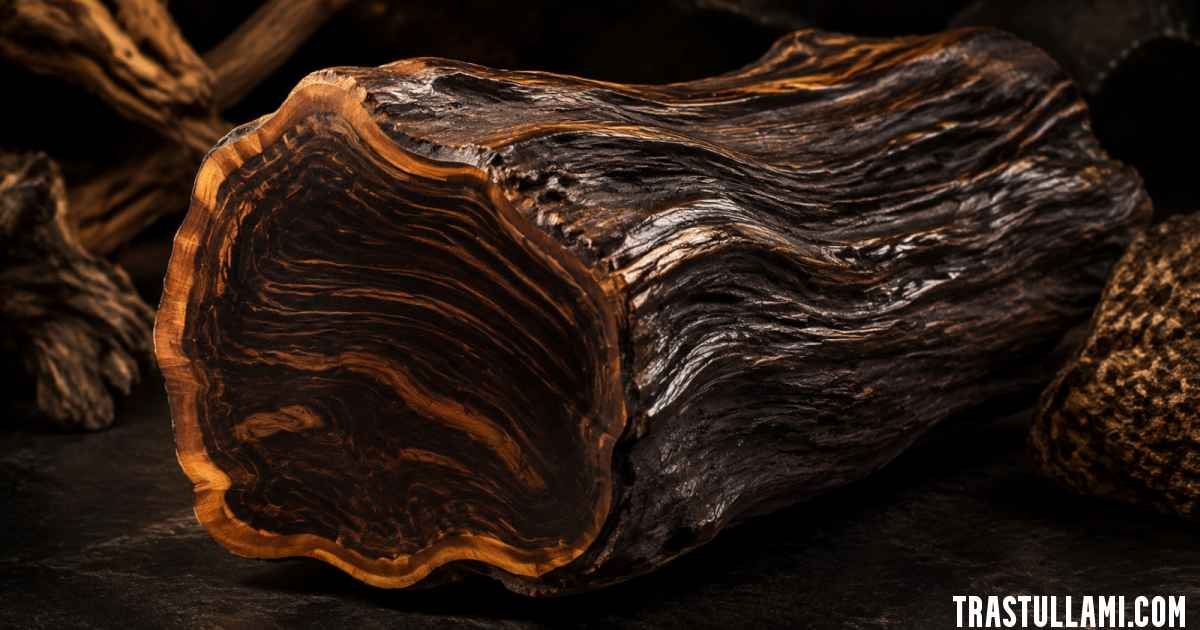
Its deep reddish-brown color gives it a striking appearance that contrasts beautifully with lighter woods such as cedar. The wood features a fine, dense grain, allowing artisans to create intricate carvings, polished furniture, and decorative architectural elements.
Another defining feature is its exceptional durability. If Alogum was indeed Red Sandalwood, it naturally resists insects, decay, moisture, and rot, making it ideal for structures intended to endure for generations.
The wood is also known for its pleasant natural fragrance. Sandalwood has long been valued for its sweet, woody aroma, which contributes to its continued use in perfumes, incense, meditation products, and religious ceremonies.
Its excellent acoustic qualities explain why Scripture specifically mentions the construction of harps and lyres. Even today, premium hardwoods related to sandalwood are prized for musical instruments because they produce rich tonal resonance.
Beyond its physical properties, Alogum carries profound spiritual symbolism. Since it supported Solomon’s Temple, it represents strength, faith, stability, and the presence of God. Because it was crafted into musical instruments used during worship, it also symbolizes joy, praise, and devotion.
Many Christians today choose red sandalwood bracelets, crosses, rosaries, and prayer beads because they associate the wood with King Solomon’s wisdom, biblical history, and spiritual dedication.
Modern Uses, Availability, Price, and Investment Value in 2026
Although lumberyards do not sell products labeled specifically as “Alogum wood,” many experts consider Indian Red Sandalwood to be its closest modern equivalent.
Today, similar premium hardwoods are used for:
- Luxury furniture and handcrafted cabinetry
- High-end flooring and yacht interiors
- Premium guitars, violins, harps, and other musical instruments
- Religious carvings, crosses, prayer beads, and devotional items
- Luxury veneers and decorative inlays
- Essential oils, perfumes, incense, and aromatherapy products
Because Red Sandalwood has been heavily harvested, it is protected under CITES (Convention on International Trade in Endangered Species) regulations. International trade is therefore tightly controlled, making authentic material increasingly scarce.
In 2026, authentic Grade-A Red Sandalwood typically ranges between $80 and $300 per kilogram for legally sourced raw wood, while finished luxury products—including handcrafted furniture and musical instruments—can sell for thousands of dollars depending on craftsmanship and provenance.
Anyone considering purchasing Alogum or Red Sandalwood should buy only from ethical, certified suppliers who provide proper documentation proving legal sourcing. Extremely cheap products marketed as “Alogum” are often substitutes made from stained hardwoods rather than genuine sandalwood.
For collectors, biblical enthusiasts, and investors, authentic Red Sandalwood represents not only a valuable natural resource but also a tangible connection to one of history’s most fascinating materials.
Conclusion
Alogum wood is far more than an ancient timber—it is a symbol of royalty, sacred worship, international trade, and master craftsmanship. Mentioned multiple times in the Bible, imported from the mysterious land of Ophir, and used in King Solomon’s Temple, it has fascinated historians and scholars for centuries.
While its exact botanical identity remains debated, Red Sandalwood (Pterocarpus santalinus) is widely regarded in 2026 as the strongest candidate. Its remarkable beauty, durability, fragrance, rarity, and acoustic qualities perfectly match the biblical descriptions.
Whether you are researching biblical history, investing in rare hardwoods, creating luxury furniture, building musical instruments, or simply exploring the spiritual symbolism of Scripture, Alogum remains one of the world’s most legendary woods. Owning ethically sourced Red Sandalwood today is not merely purchasing an exotic material—it is preserving a remarkable piece of living biblical history.